AMBITIOUS plans to revitialise Wellesbourne Airfield have been submitted,
The planning application, drawn up by developers Gladman, will be considered by Stratford District Council planning committee in the coming months.
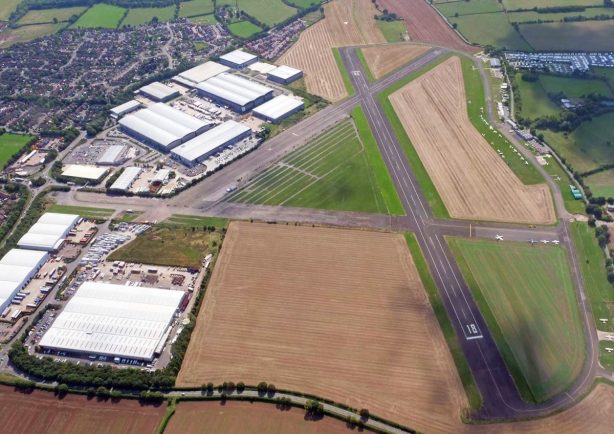
The plans seek to secure the long-term future of the historic airfield with a new runway, new hangars, aircraft parking and maintenance facilities, along with a new control tower, a check-in area, waiting lounge and cafe.
The proposals also include new industrial space.
Gladman hopes significant investment into the airfield will attract new business, training and recreational flyers to the site, appealing to a future new commercial operator.
The plans would be funded via the redevelopment of the underused part of the existing site into a new employment park of approximately 165,000 square metres – the size of around 23 football pitches.
The submission of the planning application marks a significant milestone in SDC’s move to safeguard the airfield’s future for aviation.
Back in 2016, the airfield, also home of a long-running weekly outdoor market, had been under threat of closure after its then owners, Littler Investment, revealed plans to develop the site for housing.
In March 2019, SDC approved a move to make a compulsory purchase of the site to prevent 1,500 homes being built on it. SDC pledged to continue its operation as an airfield and also to protect the businesses there.
Chris Still, Gladham’s planning and development director, said: “We’re delighted to have submitted our planning application and would like to thank everybody that took part in our public consultation. Feedback from the public and key stakeholders has led to a set of plans which we feel will secure the long-term future of the airfield. We look forward to continuing our work with the council and other key stakeholders as we progress through planning.”
The airfield’s history stretches back to 1941 when the government bought 200 acres of farmland. RAF Wellesbourne Mountford was a training centre for British and Commonwealth aircrews during the Second World War, turning out pilots, navigators, wireless operators and air gunners.
The RAF sold the airfield back to the Littler Family in 1965.