Leamington FC continue to be the highest-profile non-league standard-bearers competing in the National League North in 2025-26 whilst bearing the familiar pressures of part time football: rising costs, facility demands and the need to grow without gambling the future of the club.
In contemporary football, money tends to trickle down in the form of enormous broadcast rights, rich ownership bases and lucrative commercial relationships. Betting brands are at the very top of the game, and fans will often compare more operators through resources like a review of William Hill when following the broader sports market. The story of Leamington is quite the contrary. To understand how Leamington FC built a sustainable club, it has to change the subject matter to be focused on big-money sponsorship to community assets, local partnerships, and a long-term plan to serve both the town and the team.
A vision beyond the pitch: The strategy for a sustainable club
Leamington Football Club Limited is a limited company (incorporated in 1983), with 449 shareholders and 100% shareholding as of 21 January 2026. That building endows the club with a community-owned feel, despite it being forced into the hard economics of National League North.
The strategic dilemma is evident. The income of match days alone is hardly sufficient to make non-league football viable. Clubs require amenities that generate revenue throughout the week, assist the growth of
football teams and retain fans, schools and local organizations. The solution that Leamington has suggested is that the club becomes a self-sufficient community football club, rather than just a Saturday afternoon club.
The Cornerstone Project: A New Community Stadium for Leamington
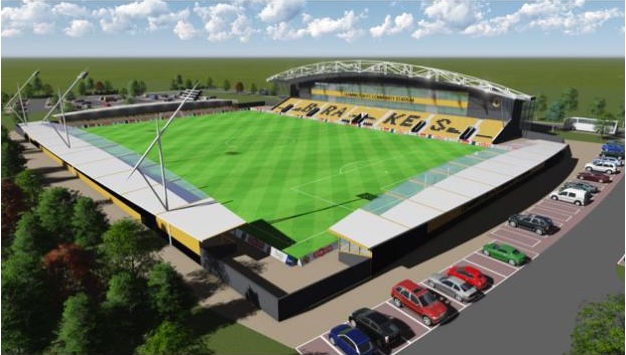
The centre of this is the new community stadium project under development with Warwick District Council. The most recent council statement and club statement outline a proposed 4,000 capacity stadium on a site near Europa Way, Gallows Hill and Fusiliers Way, with a 3G artificial pitch, conference and meeting facilities, cafe and community spaces.
This is more than a new home for the Leamington Brakes. Warwick District Council states that the overall objective is to provide a community hub in sport, leisure and health-related provision which will be supported by adjacent commercial development to help fund the stadium.
More than a match day: How the stadium will serve the community
The plan has a modern 3G artificial pitch at the center. It is not a conventional grass playing surface, and can be used throughout the year by junior teams, local leagues, schools and community groups. That is important since a sustainable club not only has to create an activity not related to first-team games.
The cafe and conference room also have the potential to generate non-matchday revenue providing the club with a more stable income base. To the local residents, the project offers the wider local community benefits: sport, education, social space and potential links with broader development, such as housing and commercial uses around the site. Previous council content had mentioned enabling development such as housing, whereas more recent pages in the project section focus on commercial development around the stadium location.
Navigating the hurdles: Planning, permission, and partnerships
Completion should not be mixed with positive momentum. In September 2025, Warwick District Council voted on the next steps: seek planning permission, complete design work and make a draft budget to test whether the build can be proceeded with.
That leaves planning permission as the next big obstacle. Massive development of sports hubs raises concerns in regards to transport, accessibility, price, land usage and sustainability. The cooperation with Warwick district council is not an option, it is a necessity. Community value, open consultation and provable community value will determine whether the project will be on blueprint and move to reality.
The club has also maintained the efforts of keeping the supporters involved, with official updates and meetings regarding the stadium project.
The Leamington model: A blueprint for grassroots football?
The Leamington strategy is based on three pillars; extensive shareholder base, multi-use community assets and a public-private partnership with Warwick District Council. The same lessons can be observed with clubs that have utilized facilities and supporter ownership or community programmes as a way of creating stability and not spending money in short term ways.
To Leamington the reward is more than just survival. It is a more formidable foundation to Warwickshire football: superior facilities, increased number of teams, broader participation and a club that serves the town through the week. Planning, funding and delivery still runs through it, but the Brakes have created a realistic model of how a non-league club can think bigger without losing its local soul.