
A team that keeps rewriting cricket history rarely needs loud introductions. Yet this side from the Oceania region still manages to surprise even seasoned followers of the game. Its record across formats speaks louder than any commentary box analysis. Five global ODI titles, hundreds of Test victories, and a culture built on pressure situations define its identity. This article breaks down why this squad sits at the top tier of world cricket, with a closer look at structure, legacy, and numbers that still shape modern matches.
For readers tracking performance trends or match dynamics, platforms like bizbet provide structured insights and live engagement tools that help interpret form cycles and match momentum without noise. It often becomes part of how experienced followers observe patterns rather than guess outcomes.
And yes, the digital side of cricket analysis has changed the way fans interact with data. Some users prefer mobile access for faster updates. It feels simple, almost too simple, but that’s the point — quick decisions often matter more than complex theories in this sport.
A cricket institution built on results, not reputation
This Oceania-based national side didn’t build its status overnight. It grew through decades of consistency, sometimes brutal competitiveness, and a refusal to drop intensity even in “dead rubber” matches. Fans often joke that this team treats every session like a final, and honestly, that’s not far from reality.
The squad has lifted the ODI World Cup trophy five times, a figure that still sits near the top of international cricket charts. It has also played more than 800 Test matches and secured over 380 wins. That ratio alone tells a story of sustained dominance, not just golden generations.
A quick breakdown of what defines this success:
- Strong domestic pipeline feeding elite-level players
- Aggressive batting approach across formats
- High-pressure bowling units built for long spells
- Deep tactical planning before major tournaments
- Adaptability across continents and pitch conditions
- Leadership continuity across eras
This team rarely drops below top-tier rankings for long. A slump might happen, sure, but it never lasts. And here’s the strange part — fans almost expect dominance now. That expectation itself becomes pressure, yet the team somehow uses it as fuel instead of weight. Strange game, cricket.
Format mastery across Test, ODI, and T20I cricket
What makes this team different? It’s not just trophies. It’s how it operates in completely different game formats without losing identity. Test cricket remains the foundation. Long sessions, patience, and mental endurance define its approach. ODI cricket brings structured aggression, while T20I matches push raw instinct and adaptability.
The interesting part is the transition between formats. Many teams struggle here, but this squad treats it like switching gears in a racing car. No hesitation. Just adjustment.
A simple comparison of performance traits across formats:
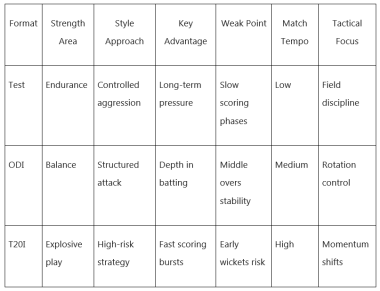
One thing stands out here — flexibility. That’s not just a buzzword. It’s a survival tool in modern cricket.
Some analysts argue this adaptability comes from domestic systems that reward all-round skills rather than one-dimensional roles. Maybe they’re right. Or maybe this team simply refuses to be predictable. Hard to tell sometimes.
Records and pressure
Here’s where things get interesting. Numbers explain success, but they don’t explain mentality. This team carries something harder to measure — expectation weight.
When players step onto the field, they don’t just play opponents. They play history. That changes decision-making in subtle ways.
Statistically, over 380 Test wins is not just a number. It reflects long-term control in different eras of cricket evolution. From uncovered pitches to modern flat tracks, the adaptation curve has stayed steady. And yet, pressure still creeps in during knockout tournaments. Funny, right? Even dominant teams feel it.
A few psychological traits often associated with this squad:
- Relentless competitiveness in close matches
- Comfort in chasing high targets
- Quick recovery after setbacks
- Strong on-field communication under pressure
- Leadership depth across multiple players
Sometimes matches turn on small decisions—one over, one review, one risky shot. That’s where experience shows its real value.
Legacy that still shapes modern cricket thinking
This team’s influence goes beyond trophies. It changed how other sides approach training intensity and match preparation. Younger squads study its discipline models almost like case studies.
There’s also a cultural layer. Players often come from highly competitive domestic leagues, where only performance matters. Reputation doesn’t carry weight in selection rooms.
A few legacy markers worth noting:
- Long-term dominance across multiple decades
- Consistent production of world-class all-rounders
- Strong fielding standards that became global benchmarks
- Tactical innovation in limited-overs cricket
- Deep bench strength across all formats
- High win rate in away conditions
These are not just stats. They are patterns repeated over time.
And maybe that’s the real secret. No dramatic reinvention. Just repetition done at elite level.
A game shaped by pressure, numbers, and instinct
Cricket fans often ask why this team stays ahead for so long. The answer never fits into one sentence. It’s structure, culture, selection discipline, and a bit of instinct that cannot be coached. Some matches feel like technical battles. Others feel like psychological chess games. This team usually wins both.
Mobile tools such as bizbet apk have become part of how modern followers track form shifts and squad changes quickly. It’s not about prediction magic. It’s about staying close to the flow of the game.
Cricket rewards those who notice small details — early swing, field placement gaps, or even body language after a dropped catch. Those things decide matches more often than big headlines. This Oceania-based side didn’t become successful by accident. It built systems that repeat success across generations. Players change, but standards don’t.
The numbers remain striking: five global ODI titles, over 800 Test matches played, and hundreds of wins across formats. Yet what stands out even more is consistency under pressure. Maybe that’s the real lesson hidden inside this cricket story. Winning once is easy. Staying at the top for decades — that’s where things get complicated, and interesting at the same time.
Betting on cricket feels less like a side activity and more like part of how fans talk about the game. People don’t just watch a match here, they dissect it ball by ball. And yes, they argue about it too, loudly. What’s interesting is how quickly opinions change once the match starts. One good over and everything you thought before the game suddenly looks wrong. Happens all the time in T20s, where momentum flips like a coin.
Cricket isn’t predictable
Live matches are where things get messy in a good way. People follow strike rates, bowling changes, and even body language. Not always logically, but emotionally first.
Sometimes you hear someone say, “this feels like a collapse coming,” and weirdly, they’re right more often than you’d expect. Not science. Just experience and watching too many games.
Cricket crowds also have this habit of overreacting early. One good partnership and it’s suddenly “done deal.” Then five overs later, silence.
There’s also this thing with numbers — everyone uses them, but everyone interprets them differently. Same stats, completely different conclusions. Classic.
And maybe that’s the whole point. Cricket here isn’t clean or predictable. It’s noisy, emotional, and slightly chaotic. Betting conversations just mirror that reality instead of simplifying it.