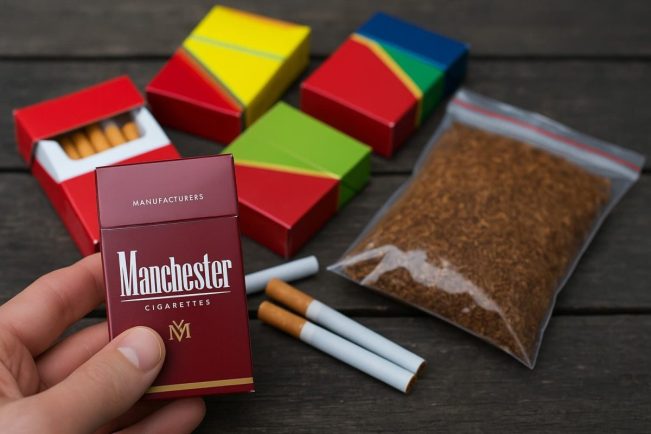
Almost half of all cigarettes consumed in the UK last year were either smuggled, counterfeit or purchased abroad, according to new analysis that suggests Britain’s illicit tobacco market has reached its highest level on record.
A report by KPMG, commissioned by Philip Morris International (PMI), found that 45 per cent of cigarettes consumed in the UK during 2025 were non-UK duty paid.
Of that total, 32.3 per cent were counterfeit or contraband products, while a further 13 per cent were legally purchased overseas and brought into the country. The study estimates that more than 10 billion illicit cigarettes were consumed in the UK last year.
The findings place the UK as Europe’s second-largest illicit cigarette market by volume, behind France, following a sharp rise in illegal tobacco consumption over the past year. According to the report, illicit cigarette consumption increased by around 1.5 billion cigarettes compared with 2024, representing growth of almost 20 per cent.
The financial impact on the public purse is substantial. KPMG estimates that illicit tobacco consumption cost the Treasury approximately £4.46 billion in lost tax revenue during 2025. That figure is equivalent to the annual salaries of more than 95,000 police officers, according to calculations cited in the report.
The study points to a significant shift in the nature of the illegal trade. While counterfeit and smuggled cigarettes have traditionally entered Britain through international supply routes linked to countries including Turkey and Belarus, enforcement agencies have increasingly uncovered large-scale domestic production facilities. Several high-profile raids over the past year have revealed illegal cigarette factories operating inside the UK, capable of producing hundreds of millions of cigarettes annually.
Industry and enforcement sources say organised crime groups are increasingly moving production closer to end markets in order to reduce transport costs, minimise detection risks and respond more quickly to consumer demand. Similar trends have been observed elsewhere in Europe, where counterfeit cigarettes now account for a growing share of the illicit market.
Alongside the rise in domestic production, investigators have highlighted the proliferation of so-called “front” shops on British high streets. These premises often present themselves as legitimate vape stores, sweet shops, barber shops, convenience stores or mobile phone retailers while allegedly serving as distribution points for illegal tobacco and vaping products.
Law enforcement agencies have long warned that illicit tobacco sales are rarely a standalone criminal activity. Organised crime groups involved in tobacco smuggling and counterfeiting are frequently linked to wider offences, including drug trafficking, money laundering, fraud and human trafficking. Previous research has shown that the profits generated by illicit tobacco can rival those from other forms of organised crime while carrying comparatively lower risks for offenders.
The growth of the black market comes despite a continuing decline in overall smoking rates across Britain. Campaigners and public health experts argue that illicit tobacco undermines efforts to reduce smoking by providing smokers with access to cheaper products that avoid tax and regulatory controls.
The report is likely to intensify debate over tobacco taxation and enforcement. Tobacco manufacturers argue that rapid increases in duty create greater incentives for consumers to seek out illegal alternatives. Public health organisations, however, maintain that higher tobacco taxes remain one of the most effective tools for reducing smoking prevalence and generating revenue for public services.
The KPMG analysis was commissioned by Philip Morris International, one of the world’s largest tobacco companies. While its findings are widely cited by policymakers and enforcement bodies, critics have previously questioned aspects of industry-funded research into illicit tobacco markets. The figures should therefore be considered in that context, although the scale of the UK’s illicit tobacco trade is broadly acknowledged by enforcement agencies and government departments.
The findings emerge amid wider concerns about the rapid growth of vape retailers. Government records show that dozens of vape businesses appear on the Home Office register of licensed sponsors for skilled worker visas, prompting calls for closer scrutiny of parts of the sector as ministers seek to tackle illegal tobacco, counterfeit vaping products and organised criminal activity operating through seemingly legitimate retail premises.