THE BRUTAL numbers game of field warfare takes centre stage in a Henry V long on committed military effort but slightly lacking in noteworthy medal-winning exploits.
A bare stage and a construction somewhat like the wooden framework for a triple decker Routemaster carry all the build-up, violent reality and grim aftermath of this touchstone moment in the history of this island’s monarchy.
Great use is made of the space available, particularly the height, but the performances on the whole, good as they are, stay on one level.
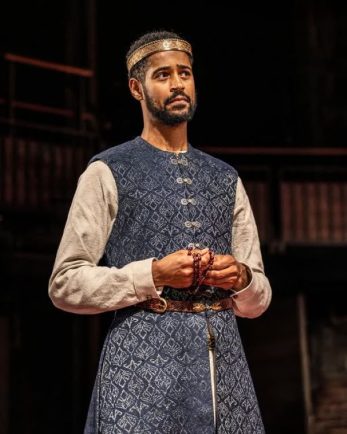
Alfred Enoch is a very considered Henry, confident in every exchange and applying the same self-assuredness to browbeating recalcitrant English nobles as he does to winning reluctant French princesses when that challenge arrives.
And perhaps here lies the suspicion of a disappointment. While not wishing to call on Hamlet depths of doubt and anger, a touch more light and shade might have been worth it. The speeches which set the bar for stirring the blood pass at a level well below tub-thumping with the odd thrown-in funny moment preventing any real chance of outright and unashamed inspiration.
Some relief from the tightly-controlled does come in the form a few of the theatre’s trademark audience asides and the completely irrelevant use of the front row to keep hold of the crown at one point.
The bold move to dispense with the Chorus and give the scene setting lines to the King himself is an intriguing touch. Here we have a King who seems not content with bestriding his world, he wants to create it too.
Henry aside, this is steadfastly a company piece and there are few performances which seem to want to break out of the supportive, ensemble formation. There are no disastrous weak links certainly, but by the same token there are no scene-stealing gems to write home about.
The comic characters are characterful without ever really being downright comic. Clearly, this is a prediction predicated on the physical rather than the verbal.
The fighting, of which there is understandably a lot, is predominately well-handled. There’s the usual crouching and grimacing out front but the choreography includes plenty of dance elements bordering on the balletic and no end of racing around with some sort of intent. Pace is the key ingredient here and director Tamara Harvey never lets the urgency flag even when the ground is thick with the fallen.
There’s a fair measure of doubling up across the opposing armies with areas of confusion not helped by a costume design which really feels ad hoc rather than curated and which, at times, fails to lift the stage picture above the drab.
As has come to be expected the RSC makes a few changes aimed perhaps at modern relevance. On the whole the changes don’t make a great deal of difference – genders are swapped without any significant effect. Other than expediency there doesn’t appear to be an underlying reason for such alterations.
There’s enough about this production to enjoy and the whole feel is one of efficiency and dependability. It’s a well-crafted, visually impeccable reading of the play. But, like the awful mundanity of war on any battlefield, perhaps what will be remembered is less than was lauded at the time.