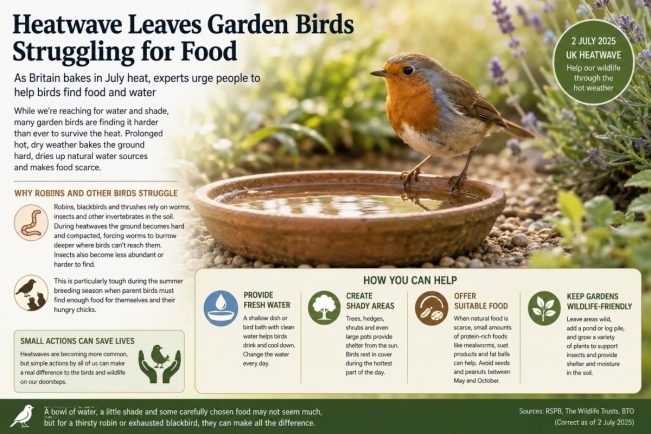
As we enter another spell of exceptionally hot weather, wildlife experts are urging people not only to provide water for birds but also to consider how heatwaves affect their ability to find food.
While most people are aware that birds need fresh water during hot weather, fewer realise that prolonged heat can make feeding far more difficult for species such as robins, blackbirds and thrushes.
Many garden birds rely heavily on worms, insects and other invertebrates found in the soil. However, during hot, dry conditions the ground can become hard and compacted, forcing worms to retreat deeper underground where birds cannot reach them. Natural water sources can also dry up, while insects become less abundant or harder to find. Wildlife organisations warn that food shortages can become a serious problem during extended periods of heat.
The situation can be particularly challenging during the summer breeding season. Parent birds must find enough food not only for themselves but also for hungry chicks, all while coping with high temperatures and dehydration. Experts say birds can quickly become exhausted if they have to spend longer searching for food and water.
Why Robins Can Struggle
Robins are among the species most affected by hard ground because much of their diet consists of worms, beetles, larvae and other creatures found close to the soil surface. When the ground dries out, these food sources become far less accessible.
Blackbirds face similar difficulties. Many gardeners will have seen blackbirds hopping across lawns after rain in search of worms. During a heatwave, that food source can largely disappear as worms burrow deeper into cooler soil.
How You Can Help
Wildlife groups say a few simple actions can make a significant difference.
Provide fresh water every day
A shallow dish, bird bath or even a plant saucer filled with clean water can help birds drink and cool themselves. Water should be changed daily, especially during very hot weather.
Create shady areas
Trees, hedges, shrubs and even large potted plants provide important shelter from the sun. Birds often seek cover during the hottest part of the day to avoid overheating.
Offer suitable food
Food can help birds when natural supplies become scarce. However, feeding advice has changed in recent years. The RSPB now recommends avoiding seeds and peanuts between May and October because of concerns about disease transmission at crowded feeders. Instead, small amounts of protein-rich foods such as mealworms, suet products and fat balls are recommended, alongside rigorous feeder hygiene.
Keep gardens wildlife-friendly
Leaving some areas slightly wild can help retain moisture in the soil and provide habitat for insects that birds depend upon. Ponds, log piles and dense planting can also offer valuable shelter during hot weather.
Small Actions Can Save Lives
Wildlife charities say that while heatwaves are becoming more common, simple actions by householders can provide a lifeline for local wildlife.
A bowl of water, a little shade and some carefully chosen food may not seem much, but for a thirsty robin or exhausted blackbird searching for food in a baked garden, they can make all the difference.
GOOD FOODS FOR ROBINS:
Live mealworms
One of the best foods you can offer.
Rich in protein and very close to a robin’s natural diet.
Particularly valuable during the breeding season.
Soaked dried mealworms
A good alternative to live mealworms.
Soak them in water for 20–30 minutes first, especially during hot weather.
This helps prevent dehydration.
Chopped apples
Small pieces are best.
Popular with robins, blackbirds and thrushes.
Pears
Soft, ripe pears cut into small chunks can be readily eaten.
Halved grapes
Excellent during warm weather because of their water content.
Cut them in half to make them easier and safer for birds to eat.
Soft berries
Strawberries, raspberries, blackberries and blueberries can all be offered.
Cut larger fruits into smaller pieces.
Banana
Soft and easy for birds to eat.
Place small pieces on a bird table or feeding tray.
Mild grated cheese
Provides protein and fat.
Offer in moderation and only small amounts.
Crushed or chopped peanuts
Never whole peanuts during the nesting season.
Use only unsalted peanuts.
Crumbled boiled egg
High in protein.
Often appreciated by robins and other insect-eating birds.
What NOT to Feed
Do NOT Feed Bread (very little nutritional value)
Do NOT Feed Milk (birds cannot digest it)
Do NOT Feed Salty foods
Do NOT Feed Mouldy fruit
Do NOT Feed Cooking fats or dripping in hot weather
Do NOT Feed Whole peanuts during the nesting season
The Best Heatwave Combination
If you want to help robins right now during the July heat, wildlife experts would probably recommend:
A shallow dish of fresh water
A handful of soaked mealworms
A few halved grapes
Some chopped apple
A shaded feeding area
You can also lightly water a corner of your lawn in the evening. This softens the soil and may encourage worms closer to the surface, making it easier for robins and blackbirds to feed naturally the following morning.
Many gardeners report that a robin will quickly learn where food is being left and become a regular visitor, especially during dry spells when natural food is scarce.