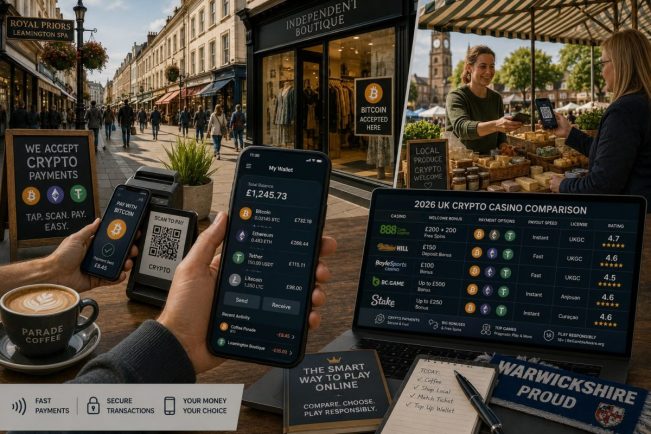
Walk through Leamington’s Royal Priors on a Saturday morning and the rhythm of paying for things has quietly changed.
The contactless tap that once felt futuristic now barely registers, and a growing number of shoppers reach for their phone rather than a card or a handful of coins.
Cafés along the Parade, independent boutiques in the Old Town and weekend market stalls all increasingly accept a tap, a scan or a transfer. For a slice of Warwickshire residents, that digital habit has stretched beyond high-street spending into something newer still: holding and using cryptocurrency for everyday purchases, leisure outings and online entertainment.
That shift naturally raises questions about where crypto can actually be spent for leisure, and online gaming is one of the clearest answers. Crypto casinos are sites that let UK players deposit and withdraw using Bitcoin and other digital currencies, and reviews of the field in 2026 rank operators on licensing, security and how quickly transactions settle. Familiar names such as 888Casino, William Hill and BoyleSports appear in these comparisons alongside newer crypto-first options, with coverage explaining how a Bitcoin wallet connects to an account, how bonuses and cashback offers are structured, and what safeguards sit behind each transaction. For residents already comfortable moving money digitally, this is simply the leisure end of a payment method they have started using elsewhere.
From contactless to crypto in everyday spending
The journey to a crypto wallet rarely begins with grand intentions. More often it starts with curiosity. Someone reads about Bitcoin in the financial pages, downloads an app to see what the fuss is about, and ends up holding a small amount of digital currency the way an earlier generation kept a jar of foreign holiday change. The difference is that this currency does not sit idle. Apps make it easy to convert, send or spend at a tap.
Warwickshire is not an obvious crypto hotspot, yet its mix of professionals, students at nearby campuses and tech-minded commuters means the technology has steady, low-key uptake. The Financial Conduct Authority’s research on crypto ownership suggests millions of UK adults now hold some form of digital asset, with most describing modest sums treated as a mix of investment and experiment. That broad pattern fits the county neatly: cautious adoption rather than headlong rush.
Shopping, coffee and the cashless county
Spend an afternoon in Warwick or Kenilworth and the everyday uses become visible. A handful of independent retailers and hospitality spots have begun displaying QR codes that let customers settle a bill in cryptocurrency, often converted instantly to sterling on the merchant’s side so the shop never carries the price swings itself. For the buyer, it feels no different from any other scan-and-go payment.
The appeal tends to be practical rather than ideological. People who already track their finances through apps, split bills with friends digitally and order their weekly shop online find that a crypto wallet slots into the same routine. It is less about rejecting cash and more about reducing friction. The same instinct that emptied wallets of loose change is now nudging a smaller group towards holding value in a phone rather than a bank card alone.
Leisure time goes digital
Where digital payments really come into their own is leisure. Warwickshire has no shortage of ways to fill a free evening, from a fixture at Leamington FC to a county cricket match, a quiet pint after bowls, or a night in front of a streaming box set. Increasingly, those leisure choices are paid for and enjoyed entirely through a screen.
Online gaming sits comfortably in this picture. Whether it is a subscription to a console service, in-game purchases, or trying a crypto-funded gaming account, the act of paying has become almost invisible. The Office for National Statistics, in its survey of public opinions and social trends, has tracked how Britons spend their leisure hours and disposable income, and the steady drift towards screen-based entertainment is hard to miss. For many residents, a digital wallet is simply the tool that funds that drift.
Why the habit sticks
Convenience explains a lot, but it is not the whole story. There is a generational comfort at play too. People who grew up topping up mobile credit, buying music as downloads and managing accounts through an app rarely think twice about adding crypto to the mix. The mental leap is small, and the speed and simplicity it brings are immediate enough to keep the habit going.
Security is the natural counterweight. The same residents who tap to pay tend to be careful about it, using two-factor checks, sticking to well-reviewed apps and treating any unfamiliar request with suspicion. That caution mirrors the wider county mood: keen on the convenience of going cashless, but wary of being caught out. Local conversations about scams and online safety reflect a community that wants the benefits of digital money without the headaches.
A measured shift, not a revolution
None of this means Leamington has become a crypto stronghold overnight. Cash still changes hands at the farmers’ market, and plenty of residents have no interest in digital currency at all. What is unfolding is gentler: a slow widening of how people choose to pay, with crypto wallets taking their place beside cards, contactless and the occasional note.
For those who have adopted them, the wallet has become unremarkable in the best sense. It funds a coffee, a match ticket, an evening of online entertainment, then disappears back into the phone. In a county that values both practicality and a quiet bit of progress, that understated adoption feels entirely in character.