
A LOST portrait of Shakespeare’s patron – and possible lover – has been uncovered after more than 400 years.
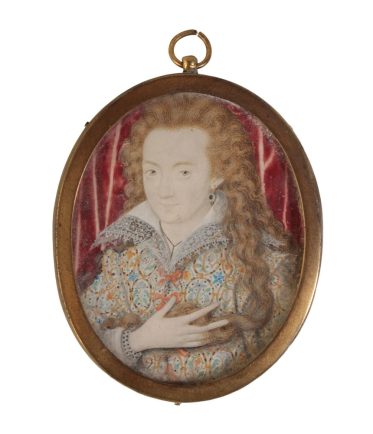
A previously unknown miniature portrait of Henry Wriothesley, 3rd Earl of Southampton has been discovered in a private collection.
The owners contacted art historian Dr Elizabeth Goldring, honorary reader at Warwick University, after reading her book Nicholas Hilliard: Life of an Artist, as they suspected the tiny portrait in their collection might be the work of the renowned miniaturist, and also wished to identify the sitter.
The painting has now been confirmed as a work by Hilliard (c.1547-1619), Queen Elizabeth I’s favourite portraitist, with the subject identified as Henry Wriothesley (1573-1624). The miniature’s style indicates it was painted in the early 1590s.
Dr Goldring said: “The Earl’s pearl earring, bracelets, beautifully embroidered clothing and long hair held close to his heart may present an initial impression of a woman, but this is a faithful representation of Wriothesley’s appearance.
“A noted patron of the arts, Wriothesley was celebrated by his contemporaries for his androgynous beauty and his love of poetry and drama. He was known, too, for his vanity and for the great pride he took in his appearance, especially his long hair.”
Shakespeare dedicated two lengthy erotic poems, Venus and Adonis and The Rape of Lucrece, to the Earl of Southampton, and Wriothesley has long been conjectured to be the beautiful, androgynous ‘fair youth’ to whom many of Shakespeare’s sonnets are addressed, with some scholars suggesting that the youth was Shakespeare’s lover.
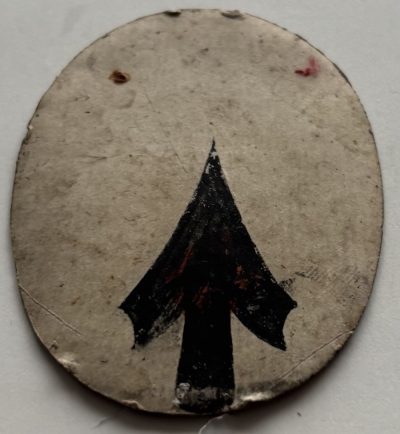
Intriguingly, a small but significant detail on the reverse of this miniature offers a fascinating potential clue to the nature of Wriothesley’s personal relationship with Shakespeare.
Dr Goldring continued: “Miniatures were inherently private artworks that were frequently exchanged as love tokens. This miniature is pasted onto a playing card, which is customary for the time. The reverse of this playing card was originally a red heart, but most unusually, the heart has been deliberately obliterated and painted over with a black arrow. It could, arguably, be a spade – but I think it more strongly resembles a spear, the symbol that appears in Shakespeare’s coat of arms.
“It’s impossible to say when this deliberate defacement took place, but it was certainly done with a purpose. One tantalising interpretation might be that Shakespeare was the original recipient of the miniature but returned it to the Earl at some point – perhaps around the time of
Southampton’s marriage in 1598 – with his personal mark firmly obscuring the heart. Such a scenario would help to explain why and how the miniature remained in a branch of the Southampton family for hundreds of years.”
Dr Goldring, in partnership with art historian Emma Rutherford and literary scholar Professor Sir Jonathan Bate, has spent the last eight months authenticating and researching the oval artwork, measuring just two and a quarter inches in height, and which they believe adds a striking new dimension to the mystery of Shakespeare’s muse.