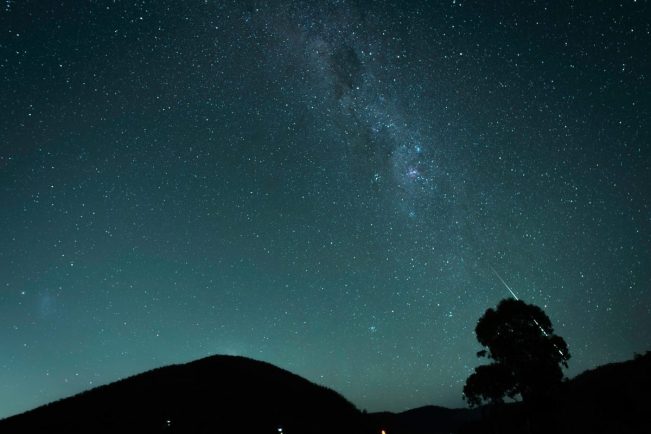
Astronomy enthusiasts and casual stargazers are gearing up to witness the display of shooting stars that promises to be both awe-inspiring and memorable.
The meteor shower, known as the Geminids, will peak on Saturday night (December 14) into early Sunday morning (December 15).
Experts predict that under ideal viewing conditions, skywatchers could see up to 150 meteors per hour, making it one of the most active showers of the year.
To fully enjoy the meteor shower, here are some recommendations from astronomers:
- – Escape city lights and head to a location with minimal light pollution, rural areas or designated dark-sky parks are ideal.
- – The meteors will appear to radiate from the constellation Gemini, located in the eastern sky. However, they can be seen streaking across all parts of the sky.
- – Peak viewing times will be between midnight and 4am, when the skies are darkest.
- – It takes about 20-30 minutes for your eyes to fully adapt to the dark. Avoid using bright phone screens during this time.
Unlike many meteor showers, which originate from comets, the Geminids are produced by an asteroid named 3200 Phaethon.
When Earth passes through the debris trail left by this asteroid, tiny particles enter Earth’s atmosphere at about 22 miles per second, creating the streaks of light we see as meteors.
Keep up to date with the weather forecast to plan your viewing spot.