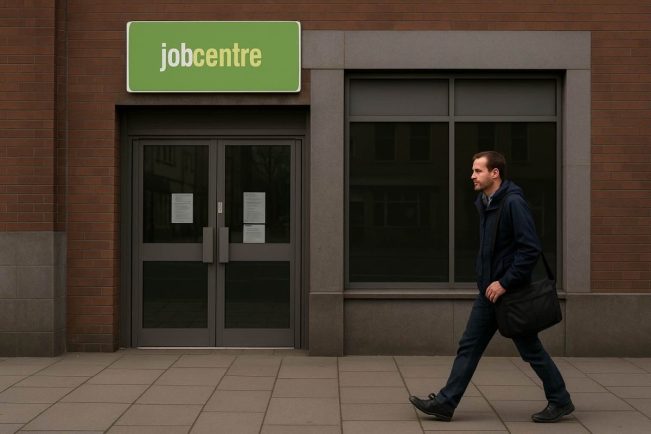
Britain’s unemployment rate has surged to its highest level since the pandemic, fuelling anxiety about the strength of the economy ahead of next month’s Budget.
The Office for National Statistics (ONS) said the jobless rate reached 4.8% in the three months to August, matching levels last seen in 2021, when the UK was emerging from the third of the lockdowns that rocked the economy during the Covid pandemic.
The increase comes as the economy shows signs of strain ahead of expected tax rises from Chancellor Rachel Reeves next month.
ONS director of economic statistics Liz McKeown said the rise was uneven across age groups:
“We see different patterns across the age ranges with record numbers of over 65s in work, while the increase in unemployment was driven mostly by younger people.”
The data reveal that while older workers are returning to jobs in record numbers, younger people are finding it harder to secure work. A record 1.7 million over-65s were in employment in the quarter to August, up 6.7% on the previous quarter and 11.8% higher than a year earlier.
Wages Lag Behind Prices
Pay growth has also weakened. Wages excluding bonuses grew by 4.7%, the slowest increase in three years. But with inflation running at 3.8%, the average worker is only 0.9% better off than a year ago, equivalent to around £4 a week in real terms.
Charlie McCurdy, an economist at the Resolution Foundation, said:
“Real weekly wages have grown by just £1.50 in total since last September – barely enough to cover the cost of a Greggs sausage roll.”
Tax Rises on the Horizon
The figures come as the Treasury prepares a Budget expected to include significant tax rises. Reports suggest Ms Reeves is looking to increase the £10 billion of fiscal “headroom” she left herself at the last Budget, potentially raising more than £30 billion to shore up public finances.
Treasury sources say the aim is to protect the Government from bond-market volatility and rising borrowing costs. However, economists and business groups warn that more tax increases could weaken the economy further, discouraging investment and hiring.
Labour Ministers Defend Jobs Strategy
Work and Pensions Secretary Pat McFadden said the Government was acting to help more people into work:
“The numbers of people in work and looking for work are at a record high. However, there are still too many people locked out of employment or training and missing out on the security a good job provides.
That’s why we are reforming Job centres and investing in our Connect to Work programme to build a workforce fit for the future and boost economic growth in every corner of the UK as part of the Plan for Change.”
But opposition parties accused Labour of presiding over economic decline. Andrew Griffith, the Conservative shadow business secretary, called the latest data “a disaster”:
“Rising unemployment is a disaster for the economy and a tragedy for affected families.
The growing crisis of young people not being able to find work is a prime example of Labour taking our country in the wrong direction.
It beggars belief that the government are making things worse with their ‘back to the seventies’ employment legislation which every single business group opposes.”
Hiring Falls Across the Country
The number of job vacancies has also fallen sharply. Employers offered just 717,000 roles in the three months to September, the lowest level since early 2021, when the country was still in lockdown. Excluding the pandemic period, this is the weakest jobs market since 2015.
That marks a steep fall from the post-pandemic hiring boom, when vacancies peaked at 1.3 million in 2022.
Suren Thiru, economics director at the Institute of Chartered Accountants in England and Wales, said:
“The jobs market is slowly suffocating, as skyrocketing employment costs and a sluggish economy trigger more organisations to limit headcount and restrain pay growth.”
Martin Beck, chief economist at WPI Strategy, added that while the market might be stabilising, conditions remain fragile:
“April’s rise in employer national insurance contributions and the sharp hike in the national living wage have clearly weighed on hiring, but figures over the summer suggest the worst of the damage is passing.
Even so, the jobs market remains more fragile than at any time in recent years.”
Local Impact
Across towns and cities, businesses continue to struggle with high costs, and residents face growing uncertainty about job prospects. Economists warn that further tax rises and weaker growth could make it harder for local firms to expand or take on new staff.
With unemployment now back at pandemic-era levels, many are asking whether Labour’s promise of economic stability is already starting to unravel.
Have Your Say
Are you a business owner finding it harder to hire or keep staff in the current climate? Are you a young person searching for your first job or struggling to find work? Or are you among the older workers returning to employment after retirement?
Share your experiences and views on the state of the jobs market. Leave your comments below or email the newsroom to tell us what you think.